
Optimism Place
Making Intimate Partner Violence Visible
Challenge
Optimism Place needed to increase awareness of intimate partner violence across Perth County, where more than 600 related police calls occur each year. Many residents believed abuse happened elsewhere or only when it became physical, which meant emotional or controlling behaviour was often minimized or misunderstood.
The non-profit organization required a visible, community-focused campaign that would help women identify early signs, encourage them to seek support sooner, and give the community clear guidance on how to respond safely.
Insights
Through community research, workshops and interviews, Intent identified several factors that continue to limit early recognition and support:
- Abuse is often seen only as physical violence, which leaves subtle warning signs overlooked
- Women may delay seeking help because they fear judgment or do not think their situation is serious enough
- Friends, neighbours, employers, and service providers often see signs first but lack clear guidance on how to respond
- Awareness needs to appear in everyday physical environments, since searching online may be unsafe for women who are being monitored
- Trusted local networks play a critical role, including businesses, volunteers, and workplaces
These insights shaped a strategy to increase visibility, build understanding, and activate a broad network of allies across Perth County.
Solutions
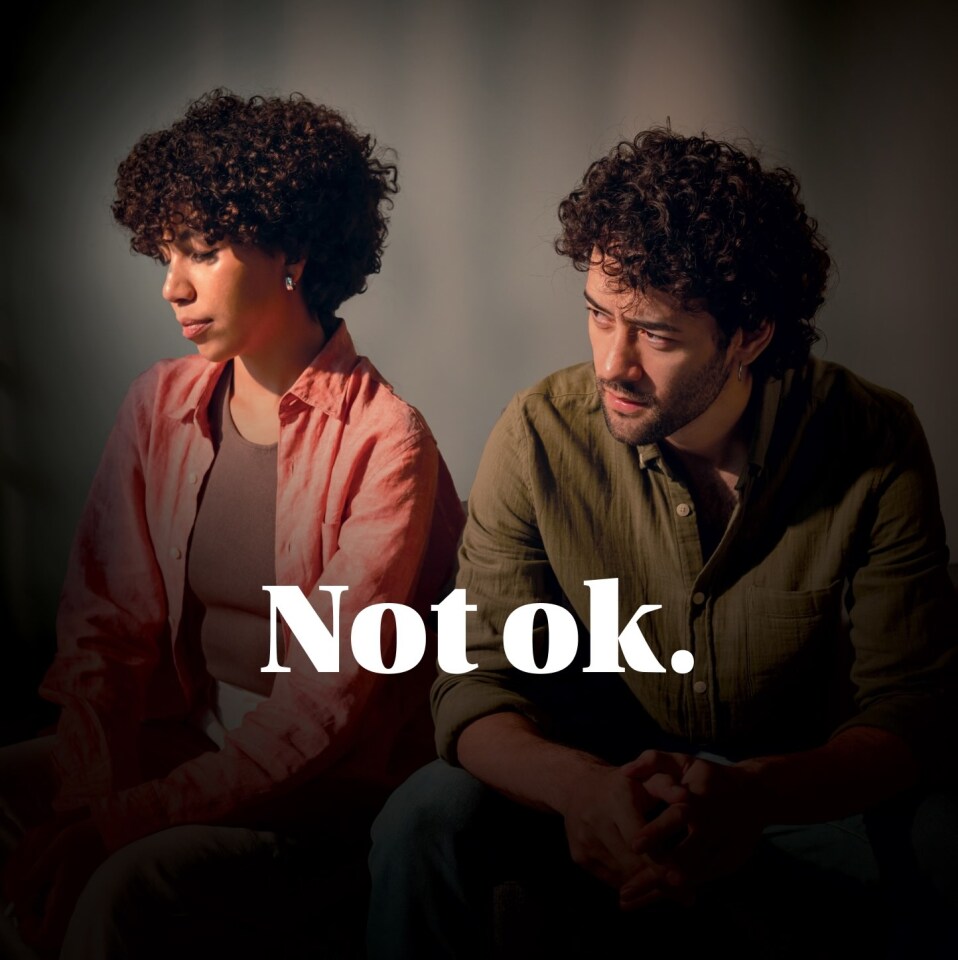
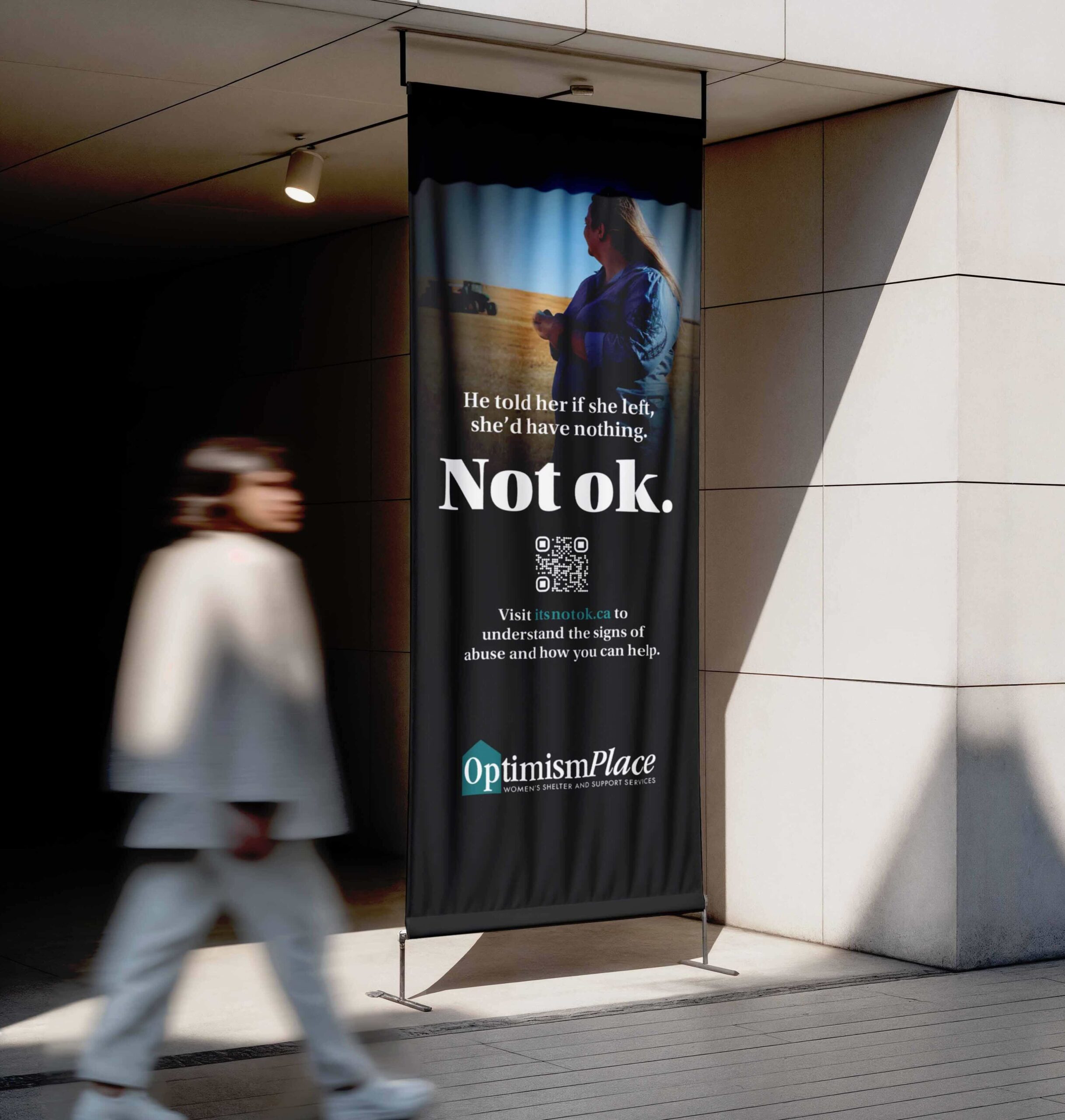
Intent developed Not ok. as a bold and research-informed awareness campaign. The work focused on:
- Reframing the issue by showing intimate partner violence as a pattern of controlling behaviours, not only physical harm
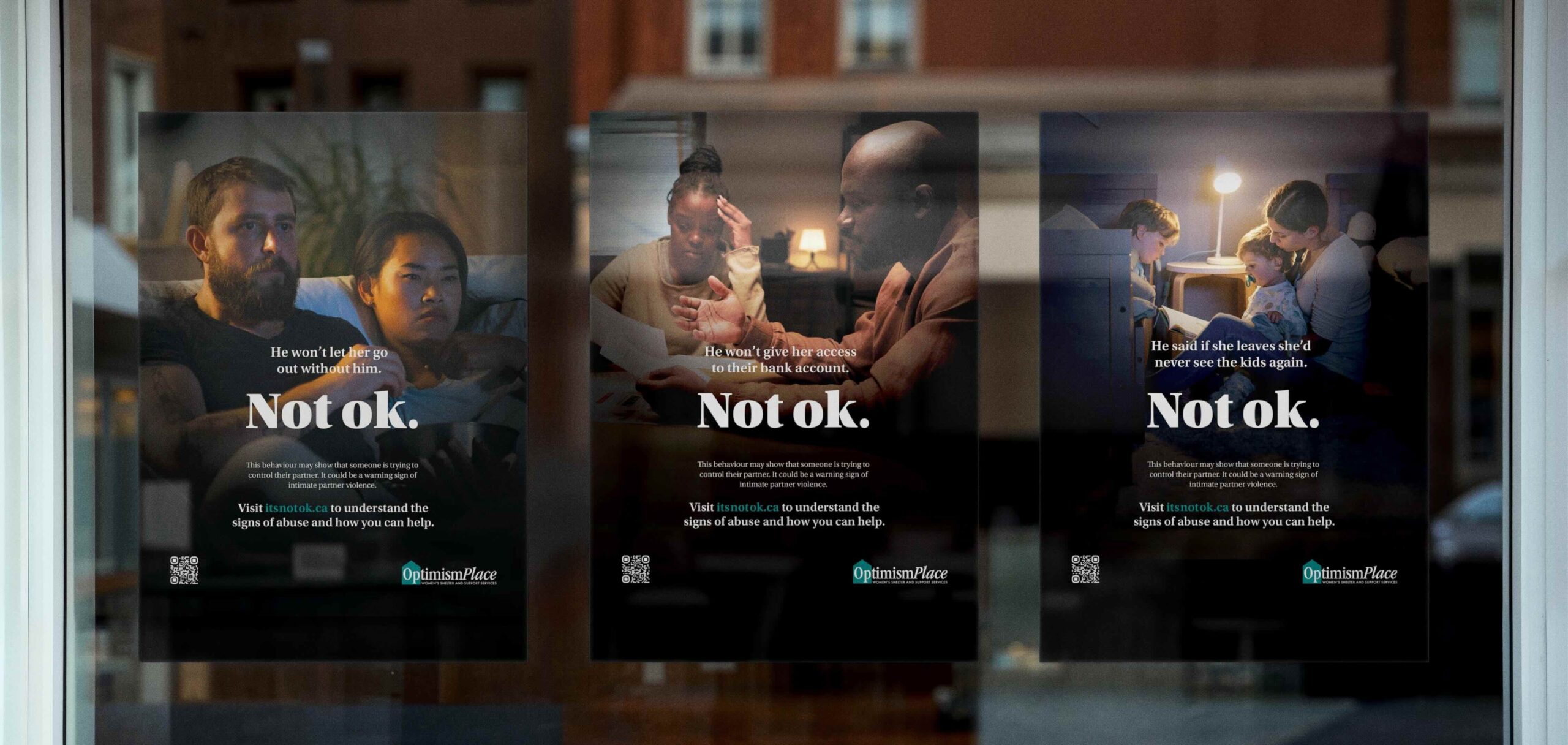
- Scenario-based creative that reflects real situations identified through interviews and workshops
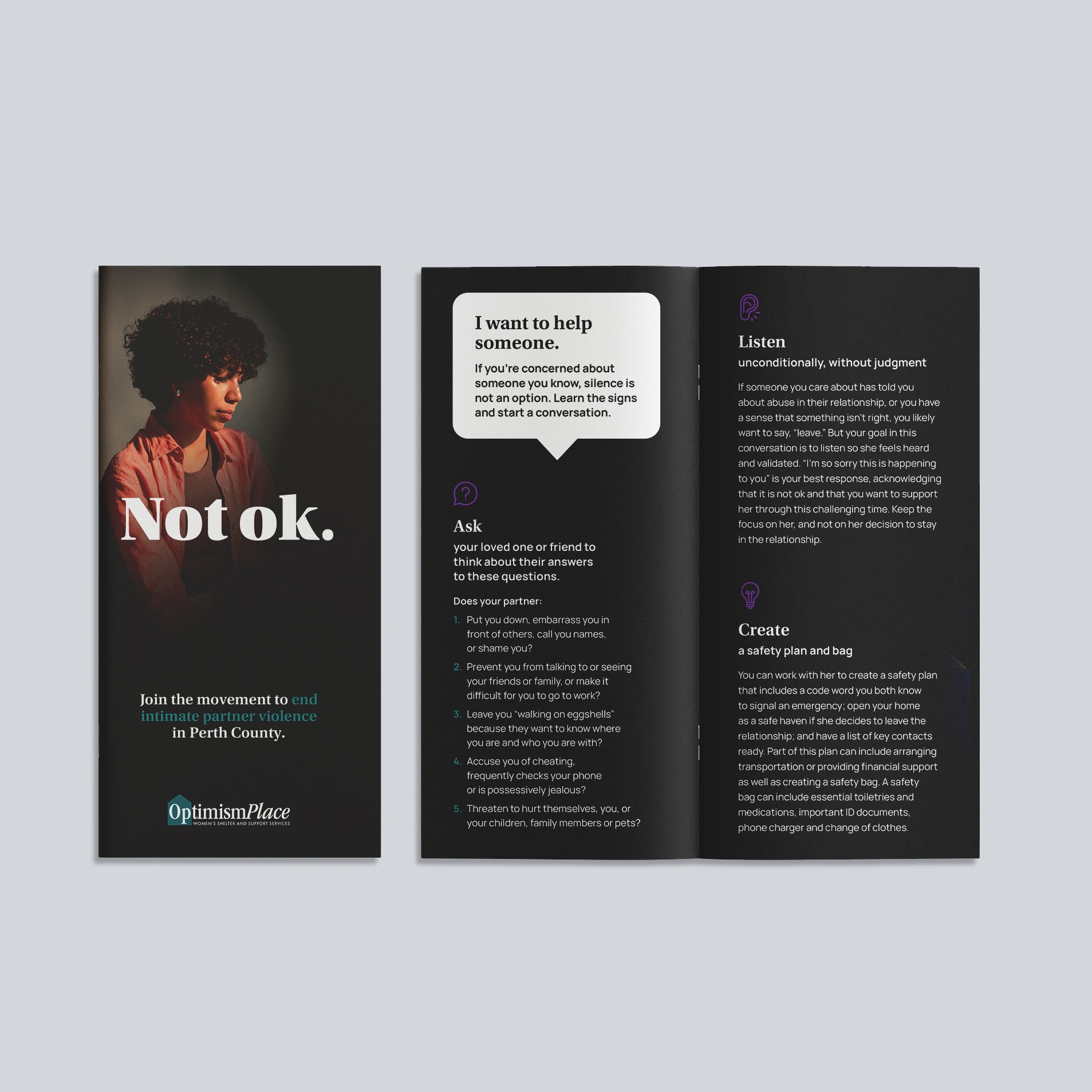
- Tools that guide real action, including ally tip sheets, workplace kits, and community materials
- A dedicated campaign microsite offering clear guidance for individuals, workplaces, and women seeking support
- Community-wide involvement from businesses, workplaces, volunteers, and media partners
This approach turned a complex, often invisible issue into something the whole community could recognize, talk about, and act on safely.
Visibility and Reach
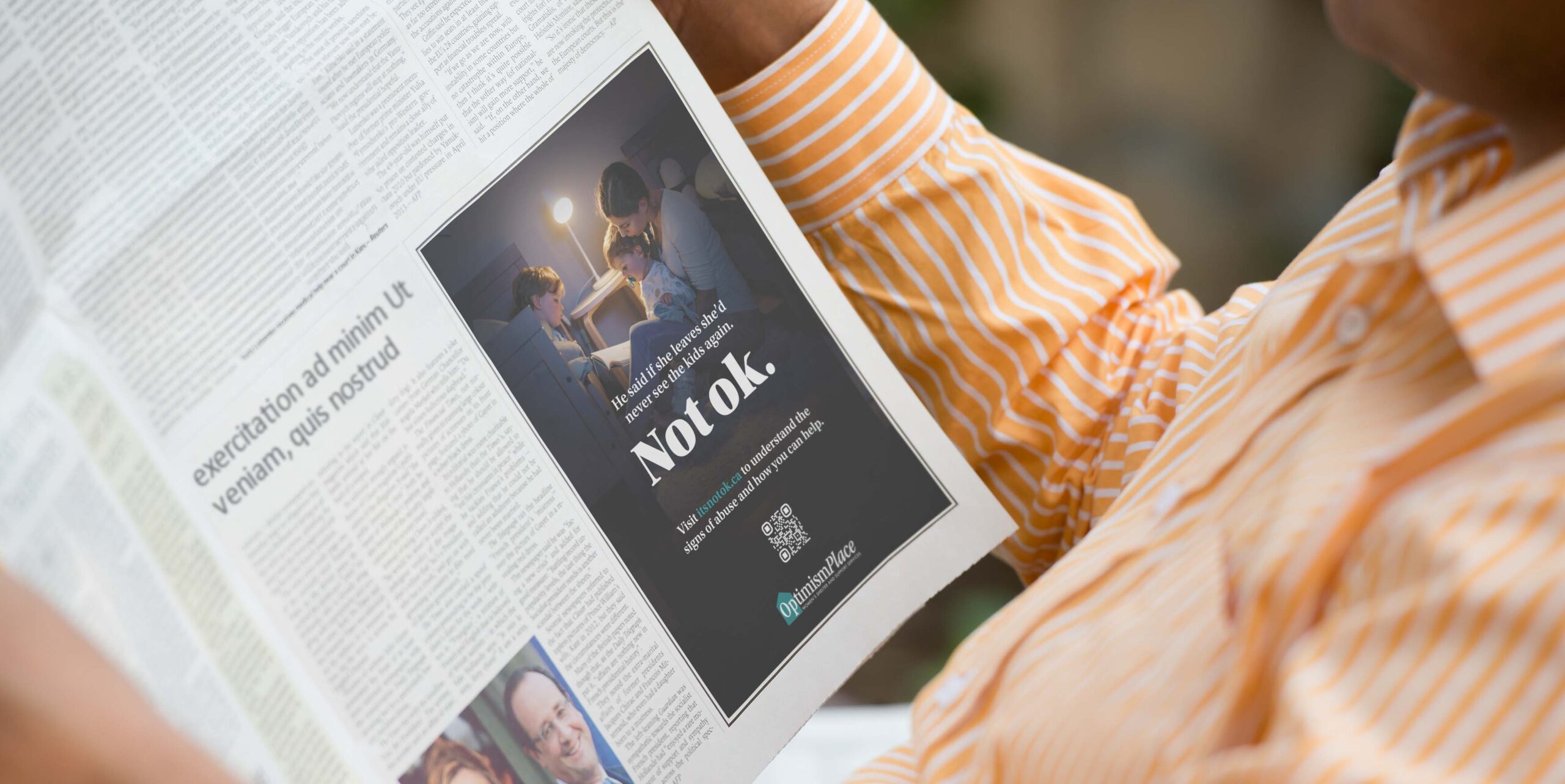
Not ok. became visible across Perth County in the places people already go. Rather than relying only on digital channels, the campaign was intentionally designed to exist within everyday community spaces and conversations.
- 14,000+ campaign materials distributed across Perth County
- Campaign materials placed in workplaces, arenas, businesses, libraries, and community spaces
- 15 newspaper articles and 5 radio interviews generated across the region
- 762 website users accessed campaign information, resources, and support guidance
- Campaign-specific social content generated 34,264 impressions
- Campaign social posts reached 9,755 people cumulatively across posts
- 573 direct interactions generated through campaign social content
- Campaign featured in regional and national media, including Strategy Magazine and Little Black Book
Community Impact
The campaign did more than raise awareness. It gave people a way to act, helped Optimism Place enter new conversations, and connected community members to support.
- 100+ local employers and community locations received campaign packages
- A local business requested materials after hearing the radio ads, offering to distribute them across 5 stores and 40 employees
- Volunteers helped distribute materials across Perth County
- Educational packages helped workplaces and businesses bring the conversation into their own spaces
- A survivor launched a peer-based fundraiser inspired by the campaign, raising almost $14,000 for Optimism Place
- A peer support group is being set up as a result of campaign-related conversations
- 65 people downloaded educational resources from the campaign website
- 8 direct service request calls came through the campaign website
- A therapist referred a client to Optimism Place after learning more about the campaign



“The team at Intent is creative, kind and brave. They took the time to truly understand the vision we had for our community. They embraced the mission wholeheartedly and took the time to deeply understand intimate partner violence. The team has become an extension of our organization in a way that we would have never thought possible when we embarked on this campaign. Our community is empowered to talk about intimate partner violence in new ways and it’s making a difference for women in Perth County.”


